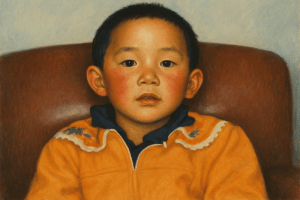
This post is part of an ongoing series exploring the complexities of The Panchen Lama Controversy.
The Dalai Lama is one of the world’s most revered spiritual leaders—a symbol of nonviolence, compassion, and resilience.
The Dalai Lama, currently in his late 80s, is the spiritual leader of Tibetan Buddhism and an international symbol of peace and compassion. Yet behind the serene exterior of this revered figure lies a profound and controversial question: what happens when the current 14th Dalai Lama passes away? The process of selecting his successor is deeply rooted in Tibetan religious tradition, but it is now entangled in geopolitics, competing legitimacies, and growing uncertainty over the future of Tibetan leadership.
The question of what happens after the current 14th Dalai Lama, Tenzin Gyatso, passes away looms large, not just for Tibetans, but for Buddhist communities across the globe. The answer touches on a centuries-old spiritual tradition, China’s political ambitions, and the very identity of Tibetan Buddhism itself.
This post explores:
-
The historical origins of the Dalai Lama and Panchen Lama institutions
-
The traditional reincarnation process
-
The current crisis around the missing Panchen Lama
-
Competing views between the Dalai Lama and the Chinese Communist Party (CCP)
-
And what the future may hold for the next Dalai Lama
A Brief History: The Dalai Lamas and Tibetan Theocracy
The institution of the Dalai Lama dates back to the 16th century. The title “Dalai Lama” means “Ocean of Wisdom” and was first bestowed posthumously in 1578 by the Mongolian ruler Altan Khan upon Sonam Gyatso, the third in a line of incarnated lamas within the Gelug school of Tibetan Buddhism. Retroactively, the two previous incarnations were recognized, making Gendun Drup (1391–1474) the first Dalai Lama.
Over time, the Dalai Lama became not only a spiritual leader but also the temporal ruler of Tibet, especially after the 5th Dalai Lama, Ngawang Lobsang Gyatso, consolidated both religious and political power in the 17th century. With the construction of the Potala Palace and recognition by the Qing Emperor, the 5th Dalai Lama elevated the role to one of immense religious and governmental influence.
From that point forward, the Dalai Lama was seen as the earthly manifestation of Avalokiteshvara, the bodhisattva of compassion, and the head of the Tibetan state.
The Origin of the Panchen Lama
The Panchen Lama, meaning “Great Scholar,” was established as a complementary figure to the Dalai Lama. The first Panchen Lama, Lobsang Chökyi Gyaltsen, was a teacher and spiritual mentor to the 5th Dalai Lama and was recognized for his profound spiritual insight. The Dalai Lama, in return, gave him the title and recognized him as an incarnation of Amitabha Buddha, the Buddha of Infinite Light.
This began the tradition of mutual recognition, where the Dalai Lama identifies the next Panchen Lama and vice versa. This spiritual interdependence was meant to safeguard the legitimacy of each figure and preserve continuity in Tibetan Buddhism’s reincarnation system.
The Traditional Reincarnation Process
According to Tibetan Buddhist belief, the Dalai Lama is a tulku, or a reincarnated lama who chooses to be reborn in order to continue serving humanity. The traditional process of identifying the next Dalai Lama typically unfolds over several years and involves a combination of spiritual signs, dreams, and rigorous testing.
After the death of a Dalai Lama:
-
High lamas and the Tibetan government-in-exile begin the search for his reincarnation, guided by omens and visions.
-
Oracles may be consulted, and signs from the natural world, such as the direction of smoke from cremation rituals, play a role.
-
Search parties travel across Tibet or neighboring regions to locate children born around the time of the Dalai Lama’s death who exhibit special qualities or recall memories of past lives.
-
Promising candidates undergo tests, such as identifying objects that belonged to the previous Dalai Lama among decoys.
A crucial figure in the confirmation process is traditionally the Panchen Lama, Tibet’s second-highest spiritual authority, who has historically played a role in identifying and educating the next Dalai Lama—just as the 14th Dalai Lama helped identify the 10th Panchen Lama.
The Panchen Lama Controversy
In 1995, the Dalai Lama identified a six-year-old boy named Gedhun Choekyi Nyima as the 11th Panchen Lama. Days later, the child and his family disappeared—taken by Chinese authorities. They have not been seen since.
In his place, China installed Gyaltsen Norbu, a child selected by the Chinese state, who is rejected by most Tibetans and is widely regarded as a political appointee rather than a legitimate tulku. While Gyaltsen Norbu has made state-sanctioned appearances and even delivered speeches on patriotism, his role as a true spiritual leader remains controversial.
The absence of an accepted Panchen Lama has crippled the traditional reincarnation process. Without the Dalai Lama’s reciprocal figure, identifying the next incarnation becomes not just difficult—but open to manipulation.
The Dalai Lama’s Stance on Rebirth
In recent years, the 14th Dalai Lama has expressed deep skepticism about continuing the reincarnation line, stating that he might choose not to be reborn or that his next incarnation may be found outside Tibet—possibly even as a woman or outside of China-controlled territory.
In his own words:
“Whether the institution of the Dalai Lama should continue or not is up to the Tibetan people.”
— The 14th Dalai Lama
Also:
“Reincarnation is not something that should be taken for granted. If I am no longer useful, there is no reason for me to return.”
— The 14th Dalai Lama
He has proposed several possibilities:
-
That the institution of the Dalai Lama may end with him
-
That he may reincarnate outside Tibet, especially in a free country
-
That he may be reborn as a woman, or even in the West
He has emphasized that only he, not Beijing, can decide the manner and location of his reincarnation. In 2011, he issued a formal statement declaring that any Chinese-controlled selection should not be recognized.
This defiance has enraged Beijing.
China’s Position: Political Authority Over Spiritual Matters
China maintains that it alone has the authority to approve reincarnations of high Tibetan lamas under a 2007 regulation known as “Order No. 5,” issued by the State Administration for Religious Affairs. According to Chinese officials, this includes any future Dalai Lama.
The Chinese Communist Party (CCP) frames this authority as part of maintaining national unity and religious harmony. In reality, many see it as an effort to control Tibetan Buddhism and undermine the Dalai Lama’s influence, both in Tibet and globally.
Thus, China is expected to install its own Dalai Lama after the death of the current one—likely using their appointed Panchen Lama as part of the process. This will create a schism:
-
One Dalai Lama selected by exiled Tibetan clergy and recognized globally by Tibetan Buddhists.
-
One Dalai Lama installed by the Chinese state and likely rejected by the Tibetan community.
This “two Dalai Lamas” scenario would mimic the current Panchen Lama controversy and deepen the crisis of religious legitimacy.
From China’s perspective, controlling the next Dalai Lama is essential to undermining the Tibetan government-in-exile and extinguishing resistance to Chinese rule in Tibet. A Beijing-approved Dalai Lama would be expected to support party ideology and promote “patriotism” among Tibetan Buddhists.
This division could last for decades, much like the situation with the Panchen Lama. It would likely create deep schisms in the Tibetan Buddhist world, especially within younger generations who will grow up without the unifying presence of the current Dalai Lama.
A Spiritual Dilemma, a Political Chessboard
The future of the Dalai Lama’s lineage is no longer merely a spiritual matter—it is a chess piece in the wider geopolitical struggle over Tibet’s identity, autonomy, and global support. The future of Tibetan Buddhism, already under siege from surveillance, cultural erasure, and re-education campaigns in Tibet, hangs in the balance.
Tibetans face a difficult road ahead. Without a legitimate Panchen Lama, and with growing Chinese interference, the very tradition that sustained Tibetan Buddhism for centuries is being tested like never before.
Still, the 14th Dalai Lama remains hopeful that wisdom and compassion will prevail, and that his people can determine their spiritual path free from coercion.
The question of succession will define not only the next chapter of Tibetan exile and resistance, but also test the international community’s willingness to defend religious freedom, self-determination, and spiritual legitimacy in the face of authoritarian control.
Conclusion: Between Rebirth and Resistance
As Tibetans await what may be the most controversial reincarnation in history, one thing is clear: the selection of the next Dalai Lama will be unlike any before it—a test not just of religious tradition, but of resilience, truth, and the future of a people determined to hold on to their spiritual legacy.
The Dalai Lama’s next life is more than a metaphysical mystery—it is the frontline of a struggle between tradition and power, between a people’s right to define their beliefs and a state’s desire to control them.
Whether or not the 15th Dalai Lama appears, and whether he is free or fettered, will shape the legacy of the 14th—and determine the spiritual future of millions.
Further Reading
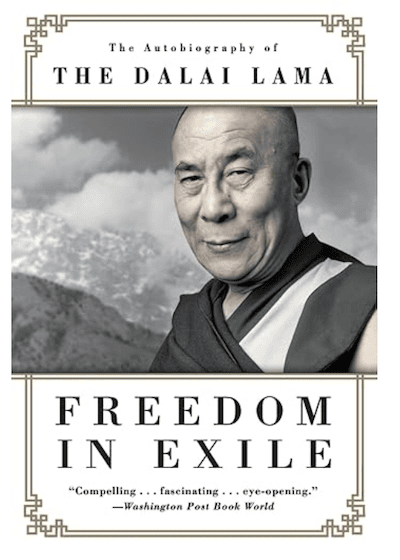 In this deeply candid and compelling autobiography, the Dalai Lama offers an intimate glimpse into the spiritual and political odyssey of his life.
With disarming honesty, he recounts the profound inner discipline that enabled him to not only embrace the intricate teachings of Tibetan Buddhism but also confront the harsh realities of exile, cultural suppression, and the enduring weight of Chinese authoritarianism.
His story is one of resilience, compassion, and unwavering moral clarity in the face of immense historical upheaval. More information…