
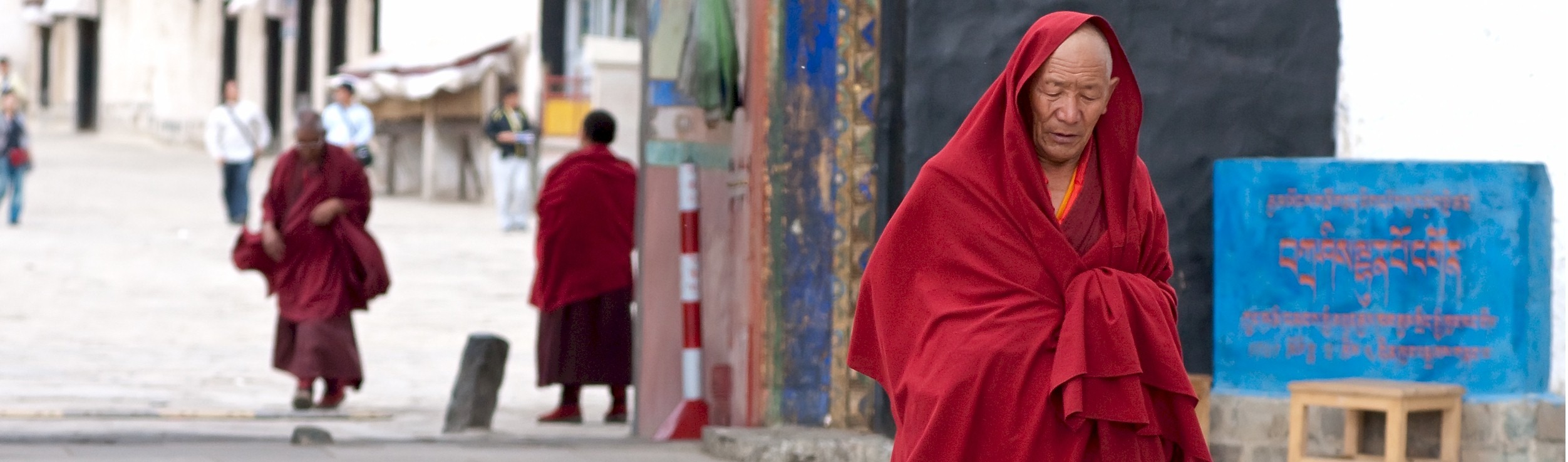
Who Will Identify the Next Incarnation of the Dalai Lama?
The Panchen Lama controversy revolves around the disputed recognition of the 11th Panchen Lama, a key figure in Tibetan Buddhism. The dispute remains a focal point of Tibet’s struggle for religious and cultural autonomy.
On November 27, 2007, while attending an interfaith conference in Amritsar, India, His Holiness, the 14th Dalai Lama, for the first time, suggested the possibility that he might not be reborn. If true, this would mark the end of a 600-year-old tradition in which his reincarnation is identified as a young child following his death.
The Dalai Lama expressed concerns that the Chinese government might attempt to manipulate the reincarnation process, bypassing traditional Tibetan Buddhist methods and appointing their own candidate as the 15th Dalai Lama.
Such interference in Tibet’s religious affairs is not unprecedented, given the long and complex history of Sino-Tibetan relations. Chinese efforts to suppress the current Dalai Lama’s influence and quell Tibetan resistance persist to this day.
The most striking example is the controversy over the identification of the 11th Panchen Lama, the second-highest figure in Tibetan Buddhism. The Dalai Lama and the Panchen Lama are both believed to be incarnations of different Buddhas—the Dalai Lama as the Buddha of Compassion and the Panchen Lama as the Buddha of Boundless Light.
According to tradition, the Panchen Lama plays a vital role in recognizing, selecting, and mentoring the next Dalai Lama, while the Dalai Lama, in turn, confirms the reincarnation of the Panchen Lama. This interdependent system has ensured the continuity of Tibetan Buddhist leadership for centuries. However, China’s interference threatens to undermine this sacred process, raising serious concerns about the future of Tibetan religious and cultural identity.
In November 1995, the Chinese government officially enthroned Gyaltsen Norbu, a boy from a family affiliated with the Communist Party, as the 11th Panchen Lama, solidifying its control over one of Tibetan Buddhism’s most influential spiritual positions. This move was widely regarded as a political maneuver aimed at undermining Tibetan autonomy and influencing the future selection of the Dalai Lama.

Earlier that year, on May 14, 1995, His Holiness the Dalai Lama had identified a six-year-old boy, Gedhun Choekyi Nyima, as the true reincarnation of the Panchen Lama. However, just three days later, the child and his family were taken into Chinese custody, disappearing from public view.
To this day, no verifiable information exists regarding the whereabouts or well-being of Gedhun Choekyi Nyima, his siblings, or his parents.
Despite repeated international inquiries and human rights appeals, Chinese authorities have provided little transparency, insisting that he is safe while refusing to allow independent verification of his status.
 The Struggle for Tibet
China’s decades-long repression of Tibetan independence persists, even as its global economic influence expands. In response, the Tibetan independence movement endures, represented here through the perspectives of Wang Lixiong and Tsering Shakya.
Both writers, shaped by the constraints of China’s one-party regime, now advocate for Tibetan cultural and political autonomy—though they approach the issue from different angles. Wang critiques the role of a fear-driven religious establishment in sustaining Chinese imperial control, while Shakya frames Tibet’s recent history as a struggle against colonial domination. Their contrasting yet intersecting viewpoints converge in the present fight for Tibetan self-determination, culminating in a shared conclusion: true autonomy is the only viable path forward. More information…
More posts on the Panchen Lama Controversy





Videos on Tibet and the Dalai Lama
Research References
During my research, I consulted a variety of sources, including internet articles, relevant literature, and PDF downloads. The references in this documentation are categorized as follows: A (Newspaper Articles), B (Books), and W (Web References).
- [A] – Newspaper Articles…
- [B] – Books on Tibet, Dalai Lama, Panchen Lama…
- [W] – Web References…
- [M] – Misc. References…
Gedhun Choekyi Nyima (born 25 April 1989) is recognized by the Dalai Lama as the eleventh Panchen Lama of Tibetan Buddhism—a designation that has sparked significant controversy over the Panchen Lama succession. Please note that we are not claiming to be Gedhun Choekyi Nyima; instead, we invoke his name to draw attention to the conflict surrounding his recognition and to highlight broader issues affecting Tibet.
This project is a work in progress, and we will continue to publish new posts regularly. We are carefully analyzing a vast amount of data, a process that requires time and meticulous attention to detail. Our commitment remains steadfast: to provide the most accurate, well-researched, and reliable information on this subject. We appreciate your patience and encourage you to check back frequently for updates as we uncover and share new insights.
 The Art of Happiness: A Handbook for Living
Nearly every encounter with him radiates joy—whether he’s laughing or simply smiling, his presence is infectious. He is the Dalai Lama: Tibet’s revered spiritual and temporal leader, a Nobel Prize laureate, and one of the world’s most influential speakers and statesmen. His universal appeal lies in his ability to uplift those around him; even a brief moment in his company leaves you feeling brighter.
When asked about his own happiness, despite having endured the profound loss of his country, he responds with an unwavering yes. For him, happiness isn’t a fleeting emotion—it’s the very purpose of life, the driving force behind every moment of our existence. Yet the age-old question remains: how do we attain this state of joy? While he has shared his insights before, it is only with the collaboration of a psychiatrist that his message has been reframed in a way that resonates with our modern understanding.
The Art of Happiness is not only the groundbreaking book that pioneered the happiness genre, but it also stands as a foundational text in positive psychology.
Through thoughtful conversations, compelling stories, and meditative reflections, the Dalai Lama shows us how to conquer everyday anxieties, insecurities, anger, and discouragement. Alongside Dr. Howard Cutler, he delves into the challenges of modern life—from personal relationships and loss to the pursuit of wealth—illustrating how to navigate life’s obstacles by drawing on a deep, abiding source of inner peace. Rooted in 2,500 years of Buddhist meditation and enriched with practical common sense, The Art of Happiness transcends cultural boundaries to address the universal challenges of the human experience. Now, a decade after its initial publication, this transformative work continues to inspire and uplift lives around the globe. More information…