 Let’s get one thing straight right up front: owning horses doesn’t make you a millionaire. It doesn’t even make you a “responsible adult” all the time. Most days, you’re just a person covered in hay, resigned to bending over for the hundredth time to pick up something foul.
I live that life every day (or at least every dawn-to-dusk). Below is the truth about running a horse farm — the joys, the punishments, and how I smuggled some of it into my short novel Between Ashes and Cobwebs.
1. The Morning Alarm: Not for the Faint of Heart
My day begins well before the sun is properly awake. Somewhere between “that’s unfair” and “I should have stayed in bed,” I haul myself up to feed the horses. Each one has its own quirks:
-
One who snorts impatiently and demands I hurry (which is not compatible with coffee).
-
One who tries to “help” by leaning over and insisting I pet her while I’m scooping grain.
-
One who conspires with the barn cat to sabotage my boots (hay strewn everywhere, always).
I top up water buckets, check hay nets, and try not to trip over my own boots in the dark. (Pro tip: the early morning is when you discover your truly creative swear words.)
2. Mucking the Stalls: Where the Real Workout Begins
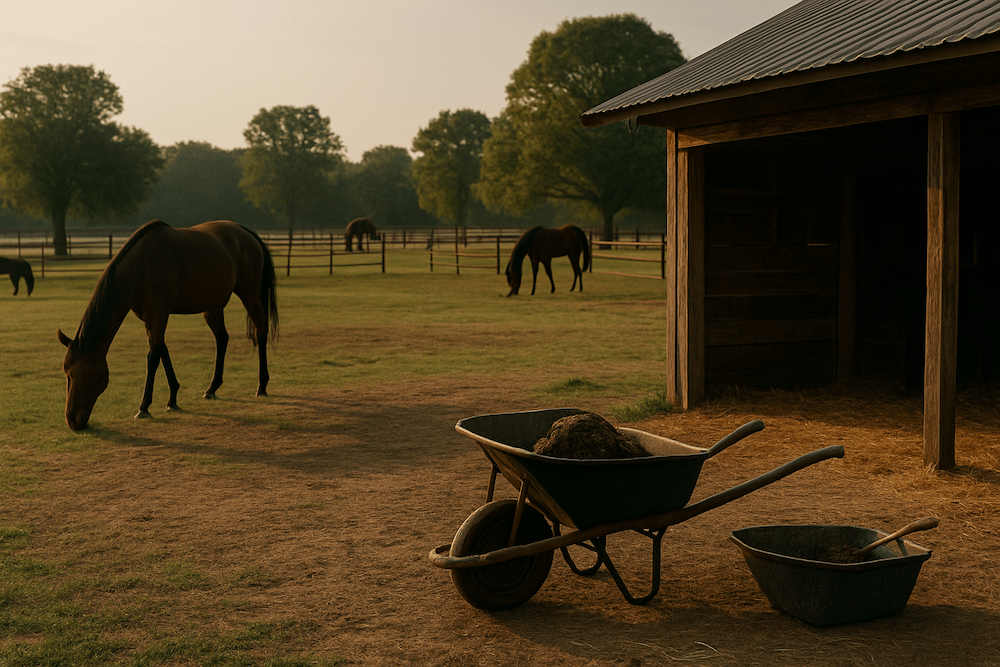
If you thought barn life meant elegant grooming and gentle walks in sunlit paddocks, let me correct you — mostly it means handling manure.
-
A decent shovel and pitchfork become your closest friends.
-
Straw and shavings fly like confetti.
-
There is no mood, no emotion strong enough to prevent you from inhaling a whiff of “horse essence” no matter how hard you try.
Between the lifting, scooping, and tossing, you lose weight whether you want to or not. (Yes, I count this as “free gym.”) But your calves? They will mutiny.
In Between Ashes and Cobwebs, the protagonist wanders into the damp smell of the stables, feeling the same sticky grit underfoot — so I know I captured that truth because I lived it.
3. Fences, Paddocks & Repairs (aka “Stop Escapes, Please”)
Remember: horses are escape artists. Every so often, I’ll notice a sagging plank, a loose wire, or a gate that now swings like a drunk.
Fixing fences:
-
Checking posts for rot (sun + rain = silent betrayal).
-
Rehammering nails (yes, sometimes at midnight).
-
Pulling up weeds and vines that decide to reclaim the boundary.
Then there’s the paddock cleanup: manure piles, mud patches, stones hiding under grass, holes from hoof-erosion — all things you must patrol.
You develop a sixth sense for fence fatigue (that moment when a post leans ever so slightly and whispers, “Fix me today, or I’ll start a jailbreak tomorrow.”)
4. The Weight Loss Program You Didn’t Ask For
You don’t need gimmicky detox teas or fancy gym subscriptions. Just get a horse, a barn, and schedule 12+ hours of physical labor.
-
Pitchfork curls (ha)
-
Wheelbarrow sprints
-
Straw bale squats
-
Trail walks — uphill — while leading a stubborn mule
You might lose weight, but your knees will protest. Your hands will get calloused. Your lungs will remind you that you once could breathe easily.
Still… at the end of the day, there’s something deeply satisfying in smelling faintly of hay and exhaustion.
5. The Daily Exhaustion: Soul-Level Tired
Evening comes, and everyone (horses included) expects you to still be alert:
-
Final feeding, water checks, locking stalls
-
Vet or farrier visits if scheduling allows
-
Tacking up tomorrow’s chores
-
Scraping manure trailers
-
Washing bits, grooming stubbornly muddy horses
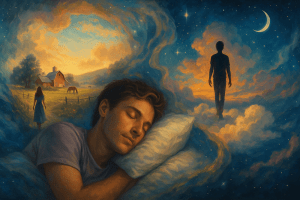
By 9 p.m., I’m often so utterly drained I could collapse in a hay pile and sleep there (minus the insects). I stagger to bed, dreams of tomorrow’s tasks wheeling in my head.
But I also fall asleep with a small, satisfied glow: a barn humming, horses safe, fences mostly standing.
6. What It Teaches You — and What Ended Up in Between Ashes and Cobwebs
Farm life teaches you humility. It teaches you how to fail (a broken plank, a fence you forgot, a horse that finds a way out anyway) and pick yourself up and fix it again. And sometimes it teaches grit — that moment when you raise your voice, clean another stall, retrace footsteps at midnight because you swear you heard a whinny, and refuse to let your charge get away.
In Between Ashes and Cobwebs, I used that grit. The characters don’t live in a fantasy bubble. They stumble, they bleed, they try to fix broken fences (literal and metaphorical). The land they walk is unforgiving, and so are the stakes. The farm life I live seeps into their bones.
7. Final Thought (for now)
So yes — when you have horses, society says you’re either wealthy or absurdly irresponsible. I’m neither. I just have a stubborn love for animals, a willingness to get dirty, and a story (or two) in me that needed fodder from real sweat and muck.
Between Ashes and Cobwebs
 In the stillness of a Vermont winter, Henry rescues a young woman whose car has gone off the road in a snowstorm. What begins as a necessary kindness unsettles the solitude he has carried for years.
Camila, grateful but guarded, enters his farmhouse as a guest yet remains an enigma. She carries her own history quietly, revealing little, and leaving Henry to sense that her arrival holds weight beyond accident.
As days pass, the routines of farm life—feeding animals, mending fences, the steady rhythm of chores—become the backdrop to their uneasy coexistence. In the silence between them, old memories rise: of family lost, of choices made, of a life narrowed by time and circumstance.
Camila, too, finds herself drawn into the quiet cadence of the place. The house, with its creaking timbers and snow-paned windows, offers both shelter and reflection. For her, as for Henry, the days become less about survival and more about what lingers when the noise of the world falls away.
Between Ashes and Cobwebs is a meditation on chance encounters, the landscapes we inherit, and the traces of the past that cling like frost to window glass. It is a story not of grand events but of fragile reckonings—of what is uncovered when two lives, bound by different losses, share the silence of a long winter. More information…