This post is part of an ongoing series exploring the complexities of The Panchen Lama Controversy.
The Battle for Tibet refers to the ongoing political, cultural, and historical struggle over Tibet’s status, sovereignty, and identity. This conflict primarily involves Tibetans, who seek either full independence or greater autonomy, and the Chinese government, which asserts its absolute control over the region.
Historical Background
-
Tibetan Independence (1913-1950)
- After the fall of the Qing Dynasty in 1911, Tibet functioned as a de facto independent state.
- The 13th Dalai Lama declared Tibet’s independence in 1913, and for nearly four decades, Tibet was largely self-governed.
- However, it lacked international recognition and formal diplomatic ties beyond India and Britain.
-
The Chinese Invasion (1950-1951)
- In 1950, the newly established People’s Republic of China (PRC) under Mao Zedong sent the People’s Liberation Army (PLA) to invade Tibet.
- The Seventeen Point Agreement (1951) was signed under duress, formally integrating Tibet into China while promising some degree of local autonomy.
- Resistance emerged almost immediately.
-
1959 Tibetan Uprising & Dalai Lama’s Exile
- Tensions boiled over in 1959, when a massive uprising against Chinese rule took place in Lhasa.
- The PLA crushed the rebellion, killing thousands of Tibetans.
- The 14th Dalai Lama fled to India, where he established the Tibetan Government-in-Exile in Dharamsala.
The Battle for Tibet in Modern Times
-
Cultural and Political Suppression
- China has tightened control over Tibet through strict policies:
- Religious repression, including tight control over monasteries and the selection of Tibetan Buddhist leaders (e.g., the Panchen Lama controversy).
- The erosion of Tibetan language, culture, and identity through “Sinicization.”
- Crackdowns on any form of dissent, including arrests of monks, activists, and intellectuals.
- China has tightened control over Tibet through strict policies:
-
Tibetan Resistance & Global Advocacy
- Tibetan activists, both within and outside Tibet, continue to push for freedom.
- The Tibetan Youth Congress and other groups advocate for full independence, while the Dalai Lama and the Tibetan government-in-exile propose the Middle Way Approach (seeking genuine autonomy under Chinese rule).
- Protests, self-immolations, and international campaigns continue to highlight Tibetan grievances.
-
China’s Strategy: Economic Development & Control
- China invests heavily in infrastructure projects in Tibet, including railways, highways, and urbanization, claiming they bring modernization and prosperity.
- The mass migration of Han Chinese settlers into Tibet has altered demographics, making Tibetans a minority in some areas.
- Heavy military presence and digital surveillance make dissent nearly impossible.
The Future of Tibet
The Tibet Question remains unresolved. The Dalai Lama, now in his late 80s, has advocated for dialogue, but China refuses negotiations on autonomy. The battle is no longer just military but also ideological, cultural, and political.
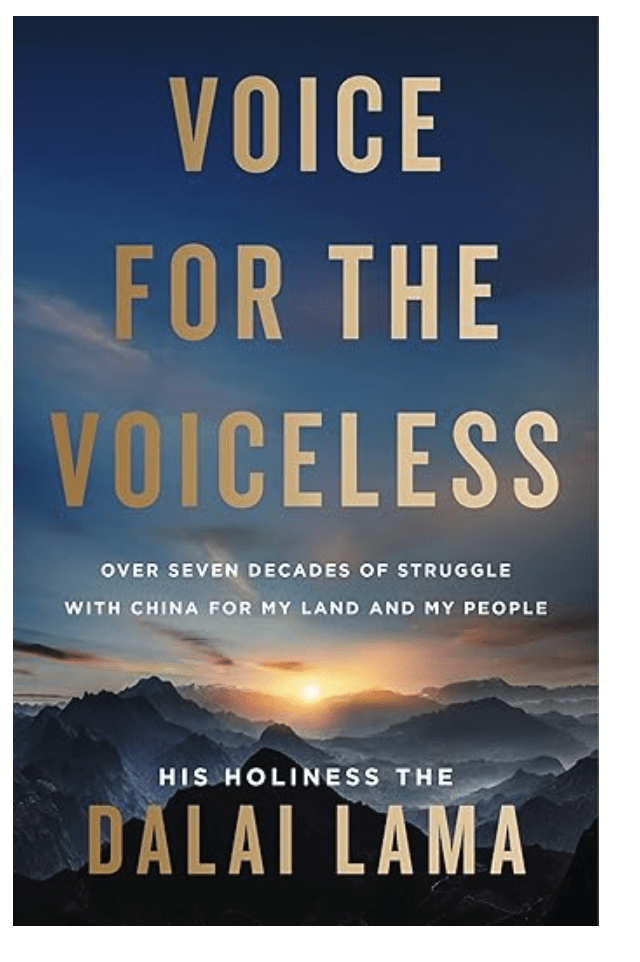 Voice for the Voiceless: Over Seven Decades of Struggle with China for My Land and My People
The Dalai Lama has spent nearly his entire life contending with the People’s Republic of China. At just sixteen, he witnessed Communist China’s invasion of Tibet in 1950; by nineteen, he met Chairman Mao in Beijing for the first time; and at twenty-five, he was forced to flee to India, becoming a leader in exile. Over the decades, he has faced successive Chinese leaders—Mao Zedong, Deng Xiaoping, Jiang Zemin, Hu Jintao, and Xi Jinping—while striving to protect Tibet’s distinct language, culture, religion, and history against overwhelming odds.
Now, nearly seventy-five years after China’s invasion, the Dalai Lama reminds the world that Tibet’s struggle remains unresolved. He sheds light on the enduring hardships his people face under Chinese rule, offers his perspective on the geopolitics of the region, and reflects on the personal journey that allowed him to maintain his humanity despite profound loss. This book captures his extraordinary odyssey—losing his homeland to an oppressive regime, forging a life in exile, confronting the existential crisis of a people and their heritage, and envisioning a future for Tibet.
Voice for the Voiceless is a powerful testament from a global icon—one who shares both his pain and his unyielding hope for Tibet’s dignity and freedom. More information…