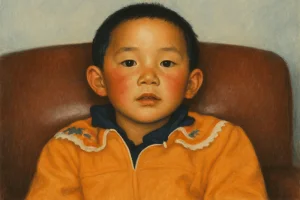
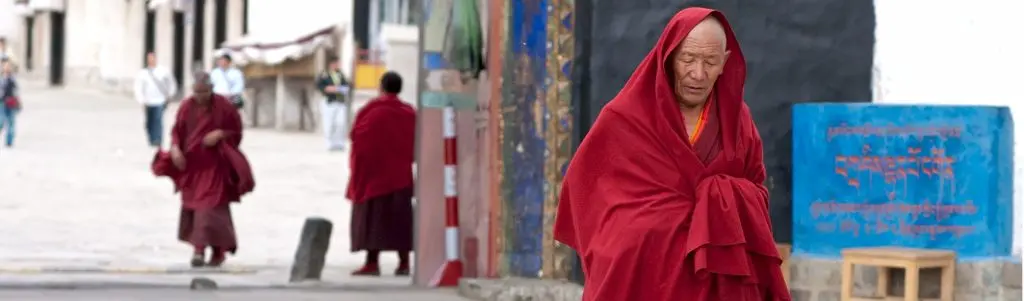
 This post is part of an ongoing series exploring the complexities of The Panchen Lama Controversy.
The authors of Contemporary Tibet: Politics, Development, and Society in a Disputed Region, Barry Sautman and June Teufel Dreyer, caution:
“The subject of Tibet is highly controversial, and Tibet, as a political entity, is defined differently from source to source and audience to audience.”
While valid, their statement extends beyond the political realm to every aspect of Tibet’s past, present, and future. Writing on any Tibetan topic is an extraordinarily complex and often exhausting task. Any work on Tibet is inevitably scrutinized, if not outright dismissed, by a myriad of experts. My research on The Panchen Lama Controversy is no exception.
My initial intent was to document the controversy with the utmost objectivity—an account that would neither appease nor antagonize the Central Tibetan Administration or the Government of the People’s Republic of China, yet provide sufficient information for meaningful discourse. However, one cannot ignore the ongoing human rights violations in Communist China. Complicating matters further is the Chinese government’s information policy, which often defies common sense and fuels skepticism about its credibility. In such a system, reality and rhetoric frequently stand at odds. Additionally, as someone residing in the United States, it is difficult, if not impossible, to remain neutral on Tibetan affairs and not align, at least in part, with the 14th Dalai Lama’s perspective.
Nevertheless, without diminishing the gravity of Tibet’s struggle under Chinese rule, I have made a conscious effort to avoid nationalistic rhetoric that could undermine the credibility of the facts and viewpoints presented. If this work contains any political undertones, they are, in the spirit of the Dalai Lama’s own words, not anti-China or anti-Chinese but rather anti-oppression. I do, however, take the liberty of referring to the current Dalai Lama as “His Holiness,” a title disputed by Chinese government officials.
Another perceived flaw of my research—perhaps its greatest strength—is its relatively limited focus on Tibetan history, culture, religion, and governance. These topics have been extensively documented by countless scholars, and it serves little purpose to reiterate their findings in exhaustive detail. Too many books, even by renowned experts, dedicate extensive chapters to Tibet’s historical background before addressing their primary topic, leaving only a few pages for substantive discussion.
The Panchen Lama controversy, in contrast, can be concisely summarized in a single article—and it has been, repeatedly, since its inception in 1995. Yet, without adequate historical context, such summaries fail to capture the attention of a broader audience, despite the controversy’s significant implications. At its core, the dispute threatens the legacy of one of the world’s most revered figures: His Holiness, the 14th Dalai Lama.
This book remains focused on its central theme while providing sufficient background to contextualize the Panchen Lama controversy. For readers seeking a broader understanding of Tibet’s historical and contemporary issues, I have included recommended readings at the end of each chapter. All sources referenced in this work are cited within their respective sections and compiled in the appendices.
Finally, I must acknowledge that this book is not based on firsthand experience, nor do I claim to be an expert on Tibetan history or politics. Rather, I am a researcher and compiler of available information—whether from books, newspapers, or online sources. Unlike many scholars writing for an academic audience, my aim is not to speak to those already well-versed in Tibetan affairs, but to present an accessible and engaging narrative for the general reader. My hope is that this work will inspire interest, provoke thought, and foster discussions on the Panchen Lama controversy.
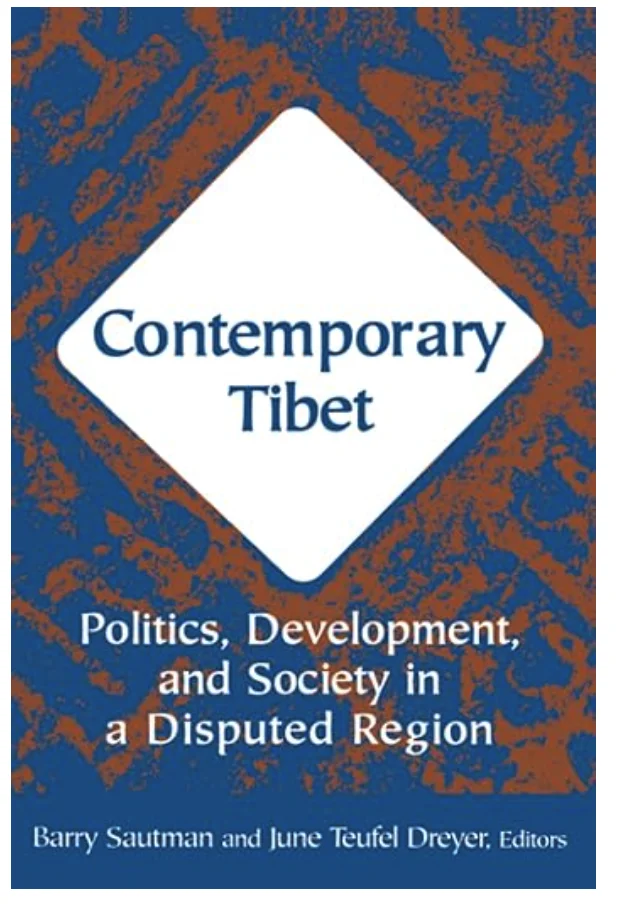 Contemporary Tibet: Politics, Development and Society in a Disputed Region
The question of Tibet remains highly contested, with its political status interpreted differently depending on the source and audience. In this groundbreaking multidisciplinary study, leading scholars in Tibetan and ethnic studies offer a comprehensive analysis of the Tibet question. Contemporary Tibet delves into critical themes shaping modern Tibet, incorporating diverse political perspectives alongside original surveys and field research.
The contributors examine key issues, including representations of sovereignty, economic development, political conditions, the exile movement, human rights, historical legacies, and Tibet’s role in international politics. Through a blend of historical context and contemporary analysis, this volume provides a nuanced framework for understanding Tibet’s current situation, its relationship with China and the West, and the potential paths that lie ahead. More Information…