This post is part of an ongoing series exploring the complexities of The Panchen Lama Controversy.
The outcome of any serious research can only be to make two questions grow where only one grew before. – Thorsten Veblen
While His Holiness, the 14th Dalai Lama, is an immensely popular and even iconic figure worldwide, the existence and significance of the Panchen Lama remain largely unknown to many who revere him.
As the second-highest-ranking lama in the intricate hierarchy of Tibetan Buddhism, the Panchen Lama plays a crucial role in maintaining religious continuity. Traditionally, the Panchen Lama shares the responsibility of identifying the reincarnation of the Dalai Lama, and vice versa—a practice dating back to the 5th Dalai Lama, who recognized his teacher, Lobsang Choekyi Gyaltsen, as the first Panchen Lama. [A15]
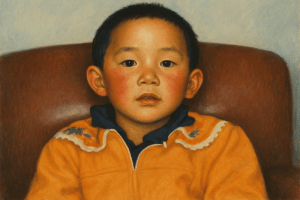
The Panchen Lama controversy arises from the unresolved status of the 11th incarnation. In 1995, the Dalai Lama identified a six-year-old boy, Gedhun Choekyi Nyima, as the rightful reincarnation. However, just days later, Chinese authorities took the child and his family into custody, and he has not been seen since. In his place, the Chinese government appointed Gyaltsen Norbu as their officially sanctioned Panchen Lama. This dispute has deepened concerns about Beijing’s influence over Tibetan Buddhism and, more critically, the future selection of the Dalai Lama.
With one Panchen Lama under Chinese state control and the other missing, it is increasingly apparent that China aims to dominate the reincarnation process, further solidifying its grip over Tibet. However, the Dalai Lama has made his stance clear, asserting, “My reincarnation is to be decided by myself.” This declaration sets the stage for a possible future in which two competing Dalai Lamas emerge—one recognized by Tibetan exiles and another endorsed by Beijing.
Ultimately, any discussion of the Panchen Lama controversy is inseparable from the broader issue of the Dalai Lama’s succession. As with many aspects of Tibet’s struggle, investigating the selection of the 11th Panchen Lama raises more questions than answers—questions that continue to fuel debate and shape the future of Tibetan identity and religious freedom.
The immense popularity of the Dalai Lama, coupled with the global focus on Chinese human rights violations, has often overshadowed certain historical and political realities. In some cases, this emphasis has even contributed to emotionally driven narratives that blur the complexities of Tibetan history.
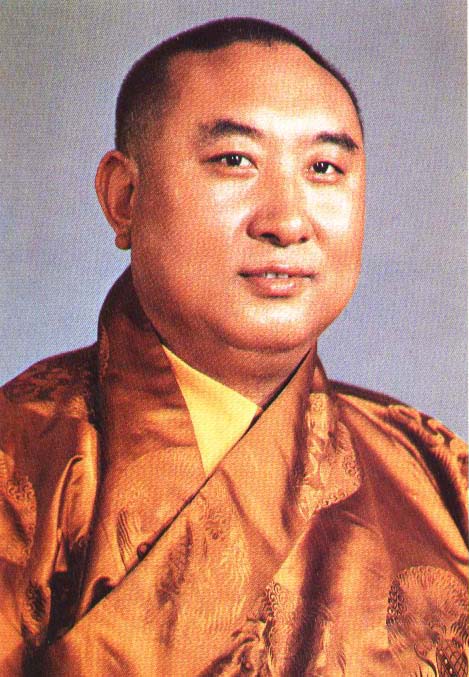
One such narrative centers on the 10th Panchen Lama, Choekyi Gyaltsen. His life and achievements, though frequently viewed through an anti-communist lens, offer a more nuanced perspective—one that complicates the prevailing discourse surrounding the Dalai Lama and Tibetan politics. The controversy over the recognition of the 11th Panchen Lama further adds to this complexity, raising critical questions about political strategy and leadership within the Tibetan exile community.
While the Dalai Lama’s spiritual influence and advocacy for peace remain widely respected, some argue that his political decisions have, at times, contributed to the challenges he faces today. Examining these aspects without bias provides a more comprehensive understanding of Tibet’s modern struggle and the intricate dynamics between its religious and political spheres.
In his book The Snow Lion and the Dragon: China, Tibet, and the Dalai Lama, Tibet scholar Melvyn C. Goldstein describes the Dalai Lama’s decision to preemptively announce the new Panchen Lama as “politically inastute.” [B8] Even the Dalai Lama himself indirectly acknowledged his—or his advisors’—lack of political acumen when he agreed to allow China to maintain political control over Tibet in exchange for his return as a purely religious leader. [A25]
One indisputable historical fact is that after the 14th Dalai Lama fled Tibet in 1959, the 10th Panchen Lama, Choekyi Gyaltsen, became the most influential political and religious figure in the region. Unlike the Dalai Lama, he actively sought to shape policy and decision-making. During the upheaval of the anti-Chinese revolt that same year, Choekyi Gyaltsen remained in Tibet, maintaining delicate communications between Beijing and the exiled Dalai Lama. [A29] By the time of his death in 1989, he was the most senior Tibetan official within the Chinese government [W17]. Though often criticized as a compliant figure, he frequently advocated for Tibetan interests [A60] and never publicly denounced the Dalai Lama, despite immense pressure from Beijing. [A77]
His most significant contribution was the 70,000 Character Petition [B4], a bold critique of China’s brutal suppression of Tibetans following the 1950 invasion. Chairman Mao Zedong dismissed the petition as “a poisoned arrow shot at the Party by reactionary feudal overlords.” In retaliation, the Chinese government subjected Choekyi Gyaltsen to public humiliation during Politburo meetings, stripped him of all official roles, branded him an “enemy of the Tibetan people,” and imprisoned him. After 13 years behind bars, he was released in 1977 but remained under house arrest in Beijing until 1982. Eventually, he was politically rehabilitated and reinstated to influential positions. [W44]
While some have criticized the 10th Panchen Lama’s involvement in Chinese Communist politics, the Dalai Lama himself also collaborated with the Chinese government. In 1954, he traveled to China alongside the 10th Panchen Lama to meet Mao Zedong and attend the first session of the National People’s Congress as a delegate, discussing China’s constitution. That same year, he was appointed a deputy chairman of the Standing Committee of the National People’s Congress, a position he officially held until 1964. [W45]
These historical realities illustrate the complex relationship between the Dalai Lama and the Panchen Lama—both rivals and allies within Tibet’s intricate religious and political landscape. While the Dalai Lama’s Gelug sect has dominated for centuries, the Panchen Lama’s role has remained critical. [A24]
With the 14th Dalai Lama’s advancing age, discussions about Tibet’s future have intensified. According to Tibetan Buddhist tradition, enlightened beings such as the Dalai Lama and Panchen Lama do not die but reincarnate into a newborn child. The selection of the 15th Dalai Lama is, therefore, deeply intertwined with the position of the Panchen Lama. However, with the 10th Panchen Lama deceased and China’s state-appointed 11th Panchen Lama installed in 1995, the Communist Party appears to be waiting for the Dalai Lama’s passing to assert full control over the process. As Goldstein notes, “Time appears not to be on the Dalai Lama’s side.”
Despite its official atheist stance, the Chinese Communist Party continues to struggle against the Dalai Lama’s overwhelming influence, viewing him as a separatist intent on dividing Tibet from China. [A63] According to a senior Communist Party official, all reincarnations of Tibetan spiritual leaders, including the Dalai Lama, must receive central government approval [A66], a policy that grants Beijing significant control over Tibet’s future leadership.
During the eleventh religious conclave, His Holiness explicitly rejected this assertion, declaring, “My reincarnation is to be decided by myself. Nobody [else] has the right to decide about that.” However, Chinese foreign ministry spokesman Hong Lei countered this claim, stating, “There has never been a case of a previous Dalai determining the next Dalai.” [A68]
Goldstein’s analysis encapsulates the deadlock between the two sides: “The 1995 controversy over the selection of a new Panchen Lama illustrates the enormous difficulty both sides share in compromising, as well as why Beijing has such misgivings about the Dalai Lama.” [B8]
 The Snow Lion and the Dragon: China, Tibet, and the Dalai Lama
Tensions surrounding the “Tibet Question”―the political status of Tibet―are escalating daily. The Dalai Lama has gained widespread international sympathy for his appeals for autonomy from China, yet the Chinese government maintains a hard-line stance against it. What is the history of this conflict? Is it possible for the two sides to reach an acceptable compromise? In this insightful analysis, distinguished professor and longtime Tibet expert Melvyn C. Goldstein provides a balanced and accessible perspective on the conflict along with a proposal for the future.
Drawing on his extensive knowledge of Tibetan culture and its people, Goldstein guides us through the history of Tibet, focusing on the political and cultural negotiations regarding Tibet’s status from the turn of the century to today. He outlines Tibet’s role in Chinese politics, the weak and inconsistent responses from foreign governments, the overtures and rejections from both sides, and the nationalistic sentiments intricately woven into the political discourse. More Information…