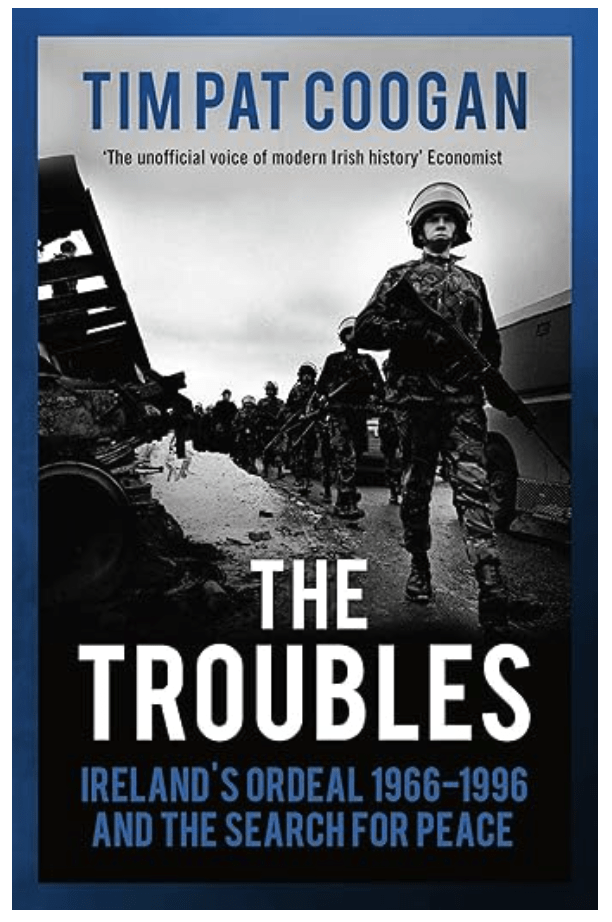
 The Troubles refers to a violent and deeply divisive conflict that gripped Northern Ireland for three decades, rooted in the question of its constitutional status and the competing national identities of its people. The conflict, which raged from the late 1960s until the Good Friday Agreement in 1998, saw over 3,000 lives lost, with countless others scarred physically and psychologically. Its legacy of trauma and division persisted long after the formal end of hostilities, shaping Northern Irish society for generations.
Tim Pat Coogan examines the origins of the conflict by exploring the systemic discrimination faced by the Catholic community in Northern Ireland, particularly in housing, education, and employment. He highlights how the lack of a peaceful political outlet for Catholic grievances, coupled with entrenched Orange Order dominance, helped fuel the unrest. Coogan argues that what began as a civil rights movement, inspired by similar struggles in the United States, was rapidly escalated into violent confrontation by an uncompromising and often brutal state response.
Throughout his analysis, Coogan profiles key figures who shaped the conflict’s trajectory. He presents Ian Paisley as the firebrand preacher whose inflammatory rhetoric deepened sectarian divisions, branding him “the great pornographer” for his ability to exploit and inflame tensions. He contrasts this with John Hume, the soft-spoken and determined peacemaker who played a pivotal role in bridging political divides. Gerry Adams is examined as a complex figure—once a militant leader, later recast as a key architect of peace. Coogan also highlights Albert Reynolds, the Irish Taoiseach who became the first to insist that a negotiated settlement was not only possible but essential.
This provocative and deeply researched volume covers all the major flashpoints of the conflict, from the infamous Bloody Sunday massacre in 1972 to the Bobby Sands hunger strike of 1981, events that became international symbols of resistance and state oppression. Though written from a nationalist perspective, Coogan approaches this tangled and painful history with clarity, insight, and occasional wit, distilling a complex and contentious period into an accessible and compelling narrative. More information…