 by William Forth, author of The Lucid War Chronicles
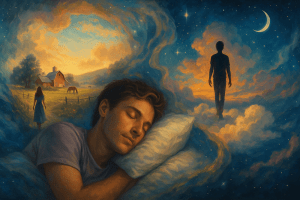
What if our dreams were more than just fleeting fragments of imagination? What if they were a place—a real, shared space where minds could meet, shape reality, and uncover secrets hidden even from our waking selves?
The idea of lucid dreaming has fascinated me for as long as I can remember. The concept that we can become conscious within our dreams, make decisions, and even manipulate the dreamscape felt like something out of science fiction. Yet, it’s a very real phenomenon—one that scientists, philosophers, and mystics have studied for centuries. The deeper I explored the subject, the more I realized that lucid dreaming wasn’t just a neurological curiosity; it was a gateway to something much bigger.
The Inspiration Behind the Story
I have always been drawn to stories that challenge reality, that blur the line between what is real and what is imagined. From classic speculative fiction to psychological thrillers, I’ve been captivated by narratives that question the nature of perception, consciousness, and control. But with The Lucid War Chronicles, I wanted to do more than just create an entertaining story—I wanted to explore the power that dreams hold over us, both individually and collectively.
The idea for this novel began as a simple question: What if lucid dreamers could connect? What if dreams weren’t just isolated experiences but a shared frontier, a hidden world where secrets, memories, and even conspiracies could unfold beyond the reach of waking life? This question led me down a rabbit hole of research—into sleep science, ancient dream rituals, government experiments, and even classified psychological studies. The more I uncovered, the more I realized that dreams might not be as private as we think.
Dreams as a Battleground
Throughout history, dreams have been regarded as sacred, mystical, and at times, dangerous. Many ancient cultures believed dreams were messages from the gods or glimpses into other realms. Modern neuroscience tells us that dreams are how the brain processes memories and emotions. But what if they were something more?
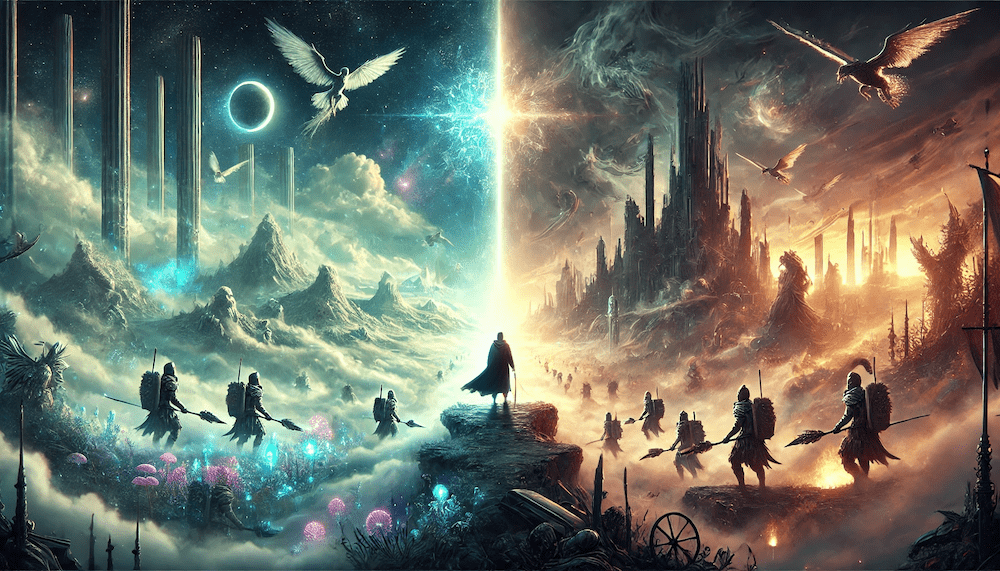
In The Lucid War Chronicles, dreams are not just personal experiences—they are a battleground. A place where power struggles unfold between those who can control their dreams and those who cannot. I was intrigued by the idea of a society where lucid dreamers were both revered and feared, where the ability to shape one’s subconscious gave certain individuals an advantage over others.
As I developed the story, I wanted to explore themes of power, secrecy, and the ethics of controlling the unconscious mind. If lucid dreamers could communicate beyond the limits of physical reality, what would that mean for governments, corporations, and intelligence agencies? Would they try to harness this ability? Suppress it? Turn it into a weapon? These questions became the foundation of the novel’s conflict.
The Characters and Their Journey
At the center of this story is Dr. Elena Rivera, an archaeologist whose lucid dreams lead her to uncover a mystery hidden in both the dream world and the waking one. I wanted a protagonist who wasn’t just a scientist, but someone who saw dreams as more than just abstract symbols—someone who understood them as windows into history, memory, and even collective consciousness.
Through Elena’s journey, I was able to explore not only the science of lucid dreaming but also the psychological and spiritual implications of stepping into a dream fully aware. What does it mean to truly control a dream? Is it possible to get lost in one? And what happens when the barriers between waking and dreaming start to dissolve?
Another key character is Dr. Miriam Locke, a brilliant sleep scientist whose research into lucid dreaming has drawn the attention of powerful forces. Miriam represents the rational, scientific approach to understanding dreams—her work is grounded in neuroscience and cognitive psychology, yet she begins to realize that there are aspects of the dreaming mind that science alone cannot explain. She is both a mentor and a mystery, someone who understands the dangers of lucid dreaming better than anyone but may also be hiding secrets of her own.
Through these characters, I was able to explore different perspectives on dreaming: the historian who sees dreams as a bridge to the past, the scientist who seeks to understand them through data and analysis, and those who wish to exploit dreams for power and control. Their journeys intertwine as they navigate the murky waters between knowledge and danger, waking and sleeping, freedom and control.
Why This Story Matters
In a world increasingly dominated by technology, where we spend more time in digital realities than in our own thoughts, The Lucid War Chronicles asks an important question: What if the last frontier wasn’t outer space or artificial intelligence, but the vast, unexplored landscape of the human mind?
Lucid dreaming represents the ultimate act of imagination and self-awareness. It is one of the few places where we are truly free—where the limits of the physical world no longer apply, and where the mind can create, explore, and experience without constraint. But with that freedom comes responsibility.
By writing this novel, I wanted to capture the wonder, the mystery, and the potential dangers of navigating a world where the rules are fluid, and reality is a matter of perception. Whether readers come to this book as dreamers, skeptics, or seekers of adventure, I hope they walk away questioning what is real, what is possible, and what dreams might truly mean.
Because in the end, The Lucid War Chronicles is more than just a story—it is an invitation. An invitation to explore, to question, and perhaps, to dream a little more boldly.
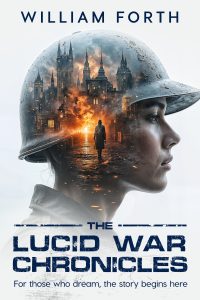 The Lucid War Chronicles tells the gripping story of individuals who master lucid dreaming to achieve extraordinary feats in their respective fields. Among them is Elena Rivera, a determined archaeologist unearthing the mysteries of Ravenstone Keep in the quaint English village of Waverly. Through her dreams, she connects with historical figures and uncovers long-buried secrets. Meanwhile, Dr. Miriam Locke, a celebrated neuroscientist and psychologist, leverages her team’s lucid abilities to solve a chilling murder in Sacramento.
This is the record of the dawn of a conflict—a war between dreamers and non-dreamers. As fear, jealousy, and misunderstanding collide with hope, connection, and defiance, the lines between reality and the dreamscape blur, heralding a new and uncertain chapter in humanity’s evolution.
For those who dare to dream, this is where the story begins. More Information…